Navigating the Production Gap: Beyond Vibe Coding to Agentic Engineering
The blog post critiques "vibe coding," where AI systems are built through trial-and-error prompts and deployed without thorough validation, leading to failures in production. Unlike demos, production systems face untested inputs and repeated requests, causing silent errors like format mismatches or tool timeouts, which create support burdens. The author argues that architectural enhancements—adding memory, feedback loops, and reliability mechanisms—are essential to bridge this gap, not just improving the model itself. The shift from vibe-driven development to structured "agentic engineering" emphasizes systematic design to handle real-world complexity, ensuring outputs and inputs are validated at scale. This transition addresses production’s harsh realities, where every failure directly impacts users, demanding rigorous processes over assumptions.
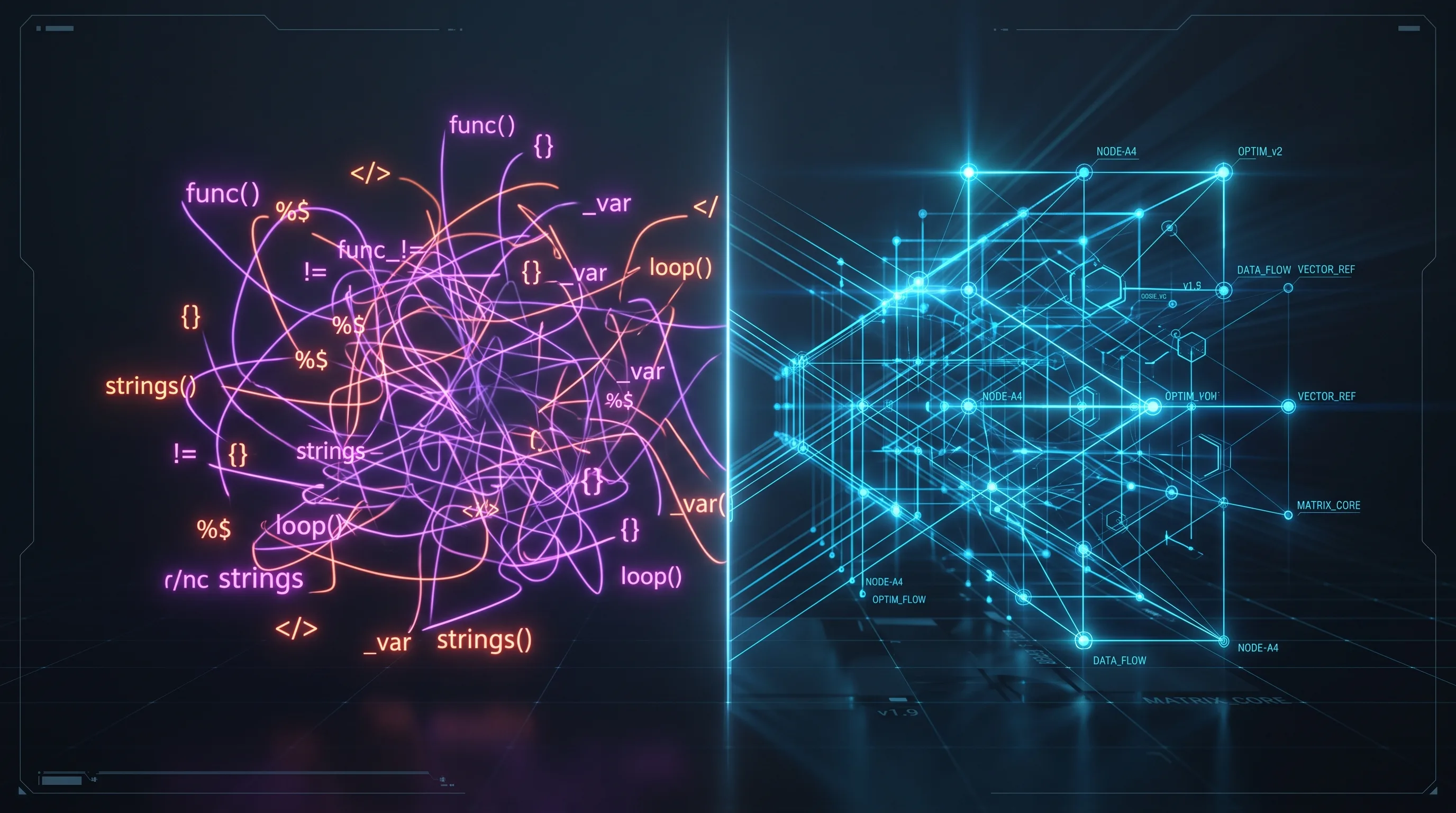
A demo forgives everything. You type a prompt, the model answers, you screenshot the good run and ship the deck. Production doesn't forgive. It runs the same prompt ten thousand times against inputs nobody tested, and every silent failure lands as a support ticket with your name on it.
That gap between the demo and the deployed system is the production chasm. Crossing it is the actual job.
Where vibe coding breaks
A prompt-and-pray pipeline has one model, one call, one attempt. Nobody validates the shape of the output before it reaches the user, and nobody validates the user's input before it reaches the model.
Two failures show up fast. The model drifts off the expected JSON format and a naive parser throws. Or a tool call times out mid-task, the process dies, and someone has to notice the failure and re-run the whole thing by hand, since nothing saved where it stopped.
Architecture causes both. Add memory, feedback, and limits, and the same model produces a reliable system.
The comparison

Fig: Prompt-and-pray pipeline versus agentic production architecture
The left pipeline has no state and no recovery. A failed run disappears, and a person has to catch it and restart it. The right architecture treats every step as a checkpoint. A worker agent attempts the task, a critic agent checks the result against the spec, and a failing attempt returns as feedback instead of a dead end. A guardrail layer enforces schema, budget, and timeout before any output reaches the user.
Pattern one: the agentic loop
Give every task a review cycle instead of a single shot. A worker agent attempts the task, a critic agent checks the result, and a failed attempt feeds its notes into the next try. The loop stops at a fixed budget instead of running forever.
class AgentRun:
    def __init__(self, task, max_attempts=3):
        self.task = task
        self.max_attempts = max_attempts
        self.attempts = 0
        self.history = []

    def execute(self):
        while self.attempts < self.max_attempts:
            self.attempts += 1
            fb = self.history[-1]["verdict"].notes if self.history else None
            res = worker_agent.run(self.task, feedback=feedback)
            ver = critic_agent.review(self.task, result)
            self.history.append({"attempt": self.attempts, "result": res})
            if ver.passed:
                return result
        raise MaxAttemptsExceeded(self.history)
Most prototypes skip the critic. Without it, a wrong answer looks identical to a right one until a user complains.
Pattern two: state that survives a crash
A vibe-coded pipeline keeps everything in memory. Kill the process and the run disappears with it. An agentic system checkpoints state after every step, so a crash costs seconds instead of the whole task.
class RunState:
    def __init__(self, run_id, store):
        self.run_id = run_id
        self.store = store

    def checkpoint(self, step, payload):
        self.store.save(self.run_id, {
            "step": step,
            "payload": payload,
            "timestamp": time.time(),
        })

    def resume(self):
        saved = self.store.load(self.run_id)
        return (saved["step"], saved["payload"]) if saved else ("start", {})
Back the store with Redis or Postgres. The choice matters less than the habit: every agent writes its progress somewhere a new process can read.
Pattern three: guardrails that stop the bleeding
A schema check, a token budget, and a timeout catch most incidents before a user sees them.
def guardrail(result, budget):
    if budget.tokens_used > budget.max_tokens:
        raise BudgetExceeded(budget)
    if not schema.validate(result):
        raise SchemaViolation(result)
    return result
Raise early and log the raise. A guardrail that fails silently costs more than no guardrail at all, because it hides the exact problem someone will ask about at 2am.
The engineer who closes the gap
Getting a model to answer a prompt takes an afternoon. Turning that answer into infrastructure that survives real traffic takes the patterns above: state that survives a crash, a critic that catches drift, and budgets that cap cost before they show up on an invoice.
Build that bridge. That's the difference between a demo and a system people rely on every day.

Written by: Md. Ahmed Alif
Hello, I'm Alif! From having a passion in content writing, here I am!
Responses (0)
Sign in to commentNo responses yet.